The Majesty of the Elemental

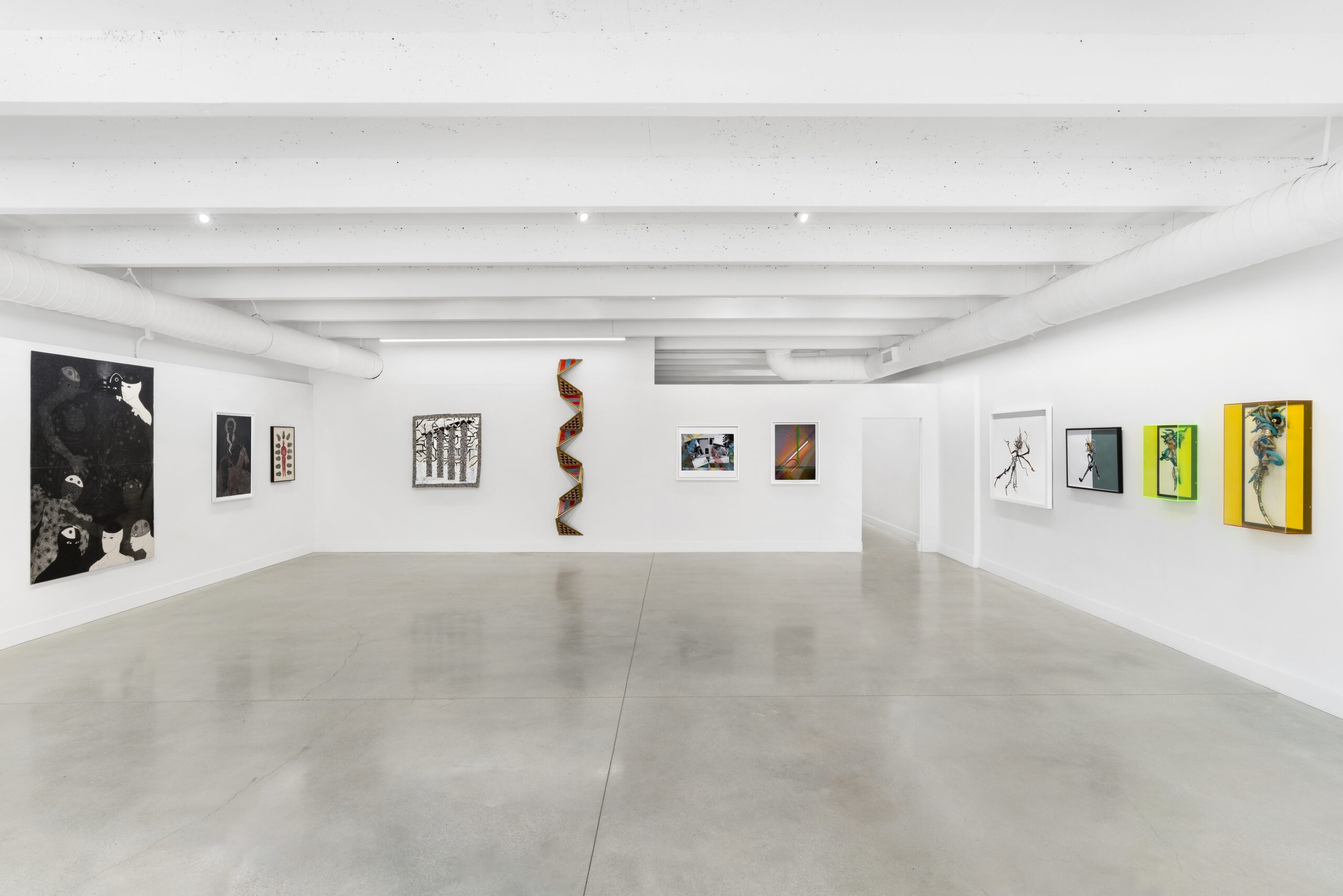
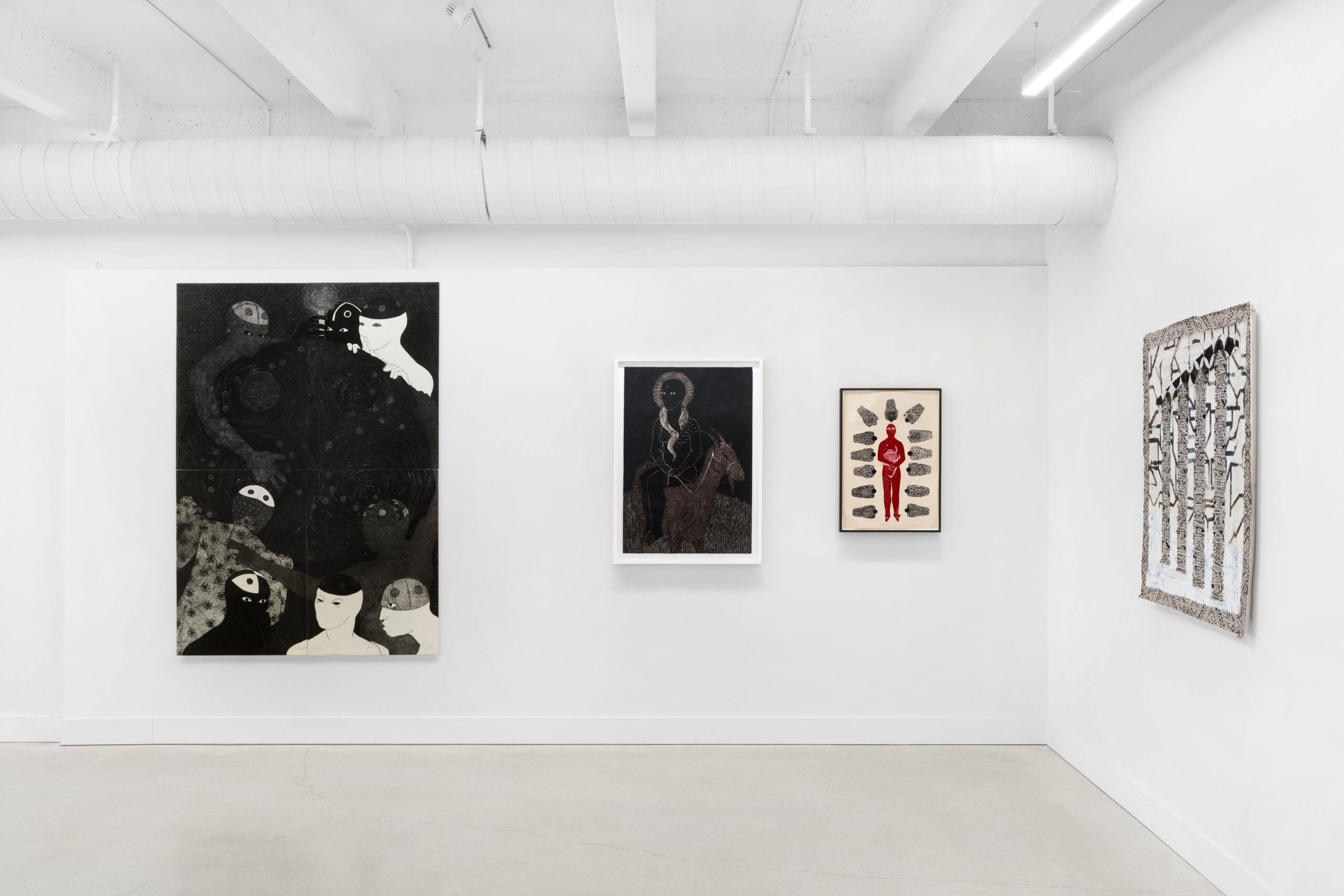


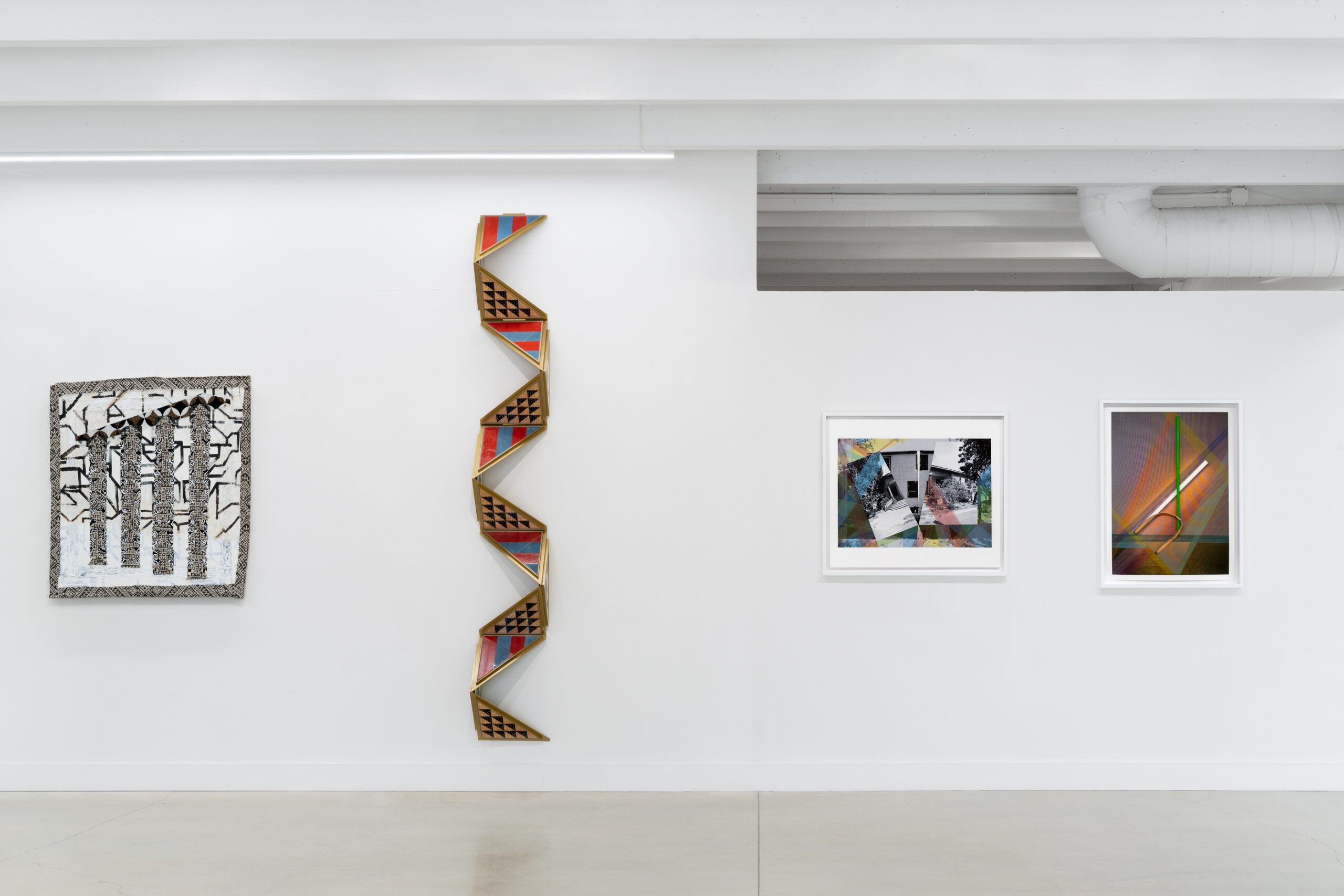

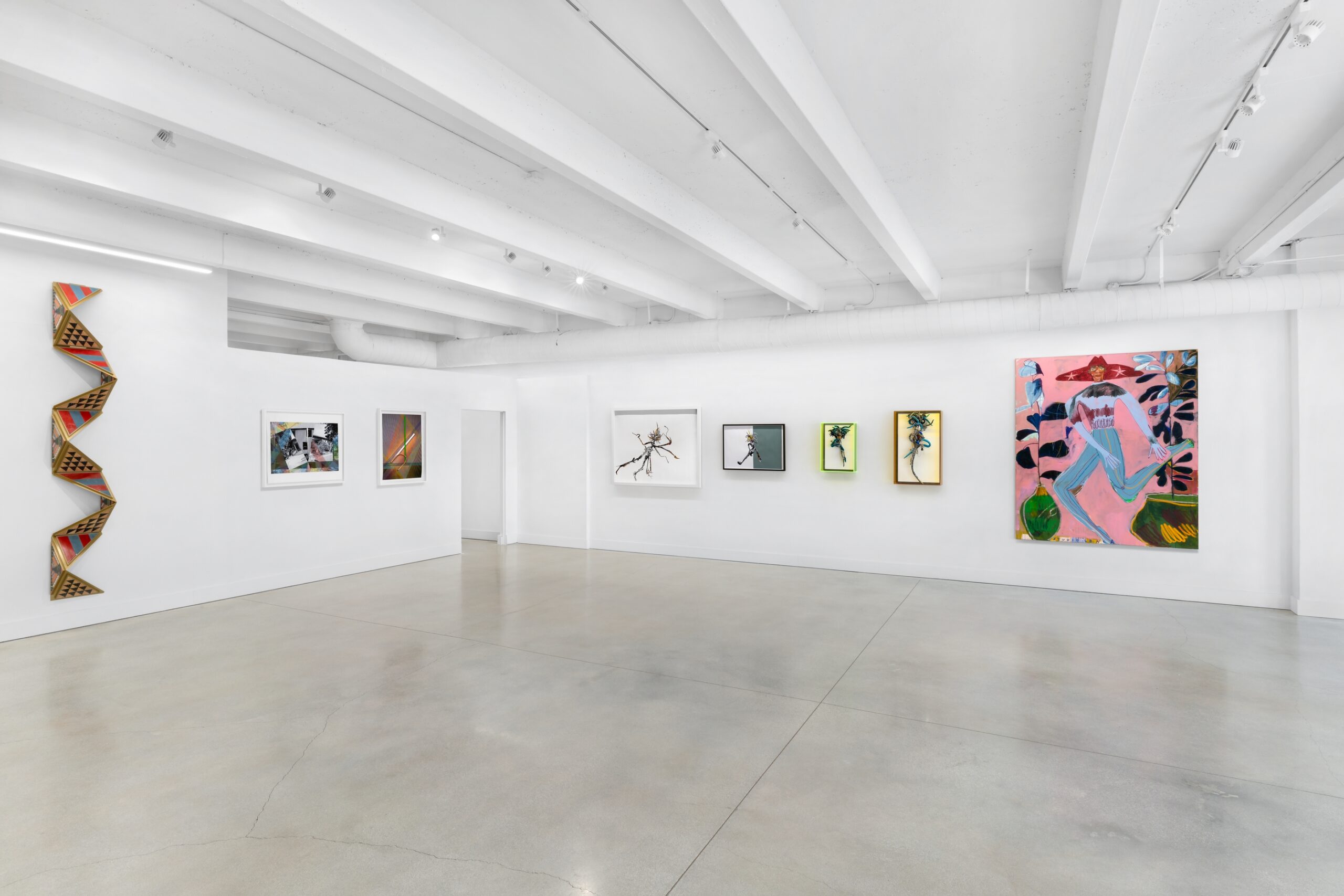
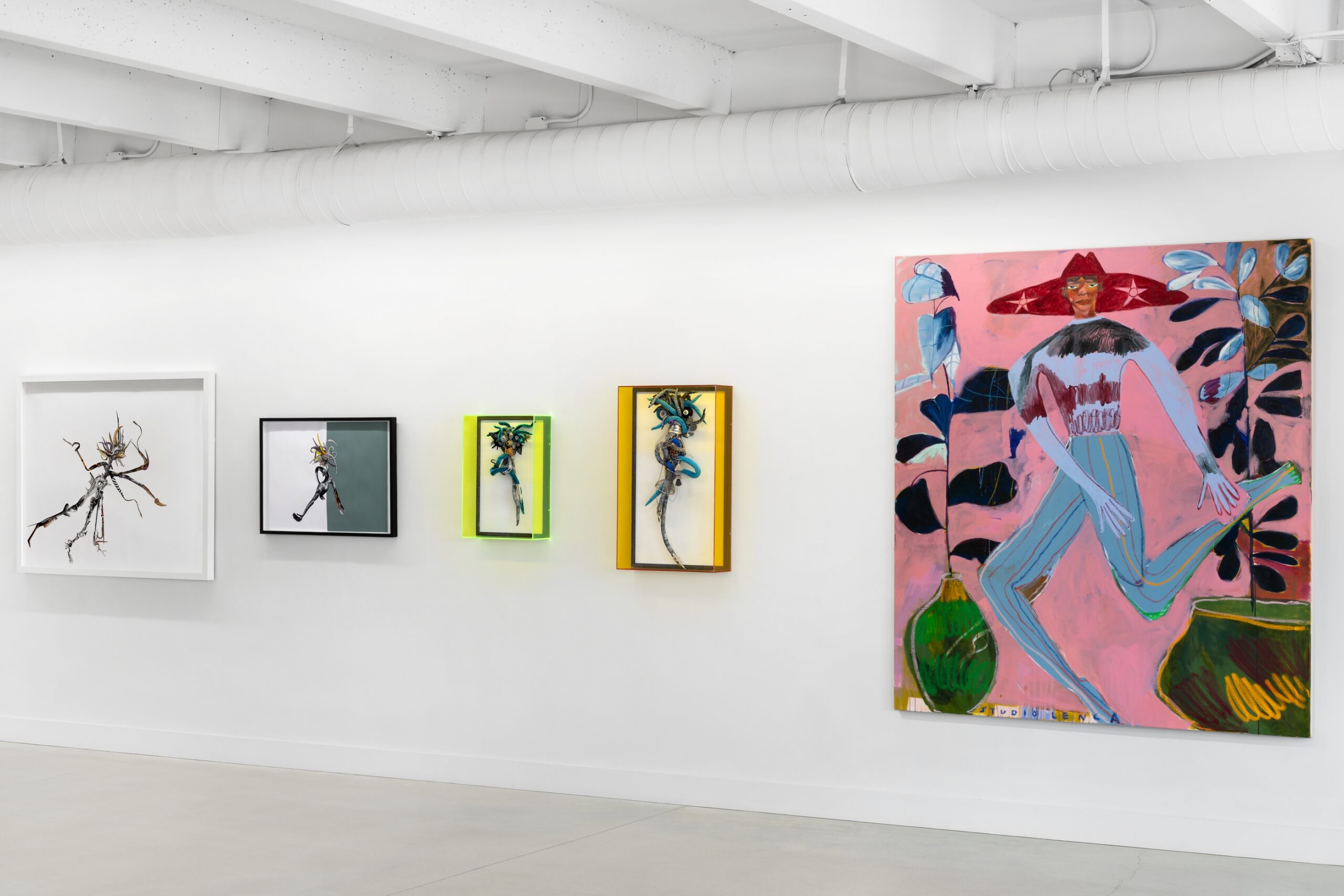
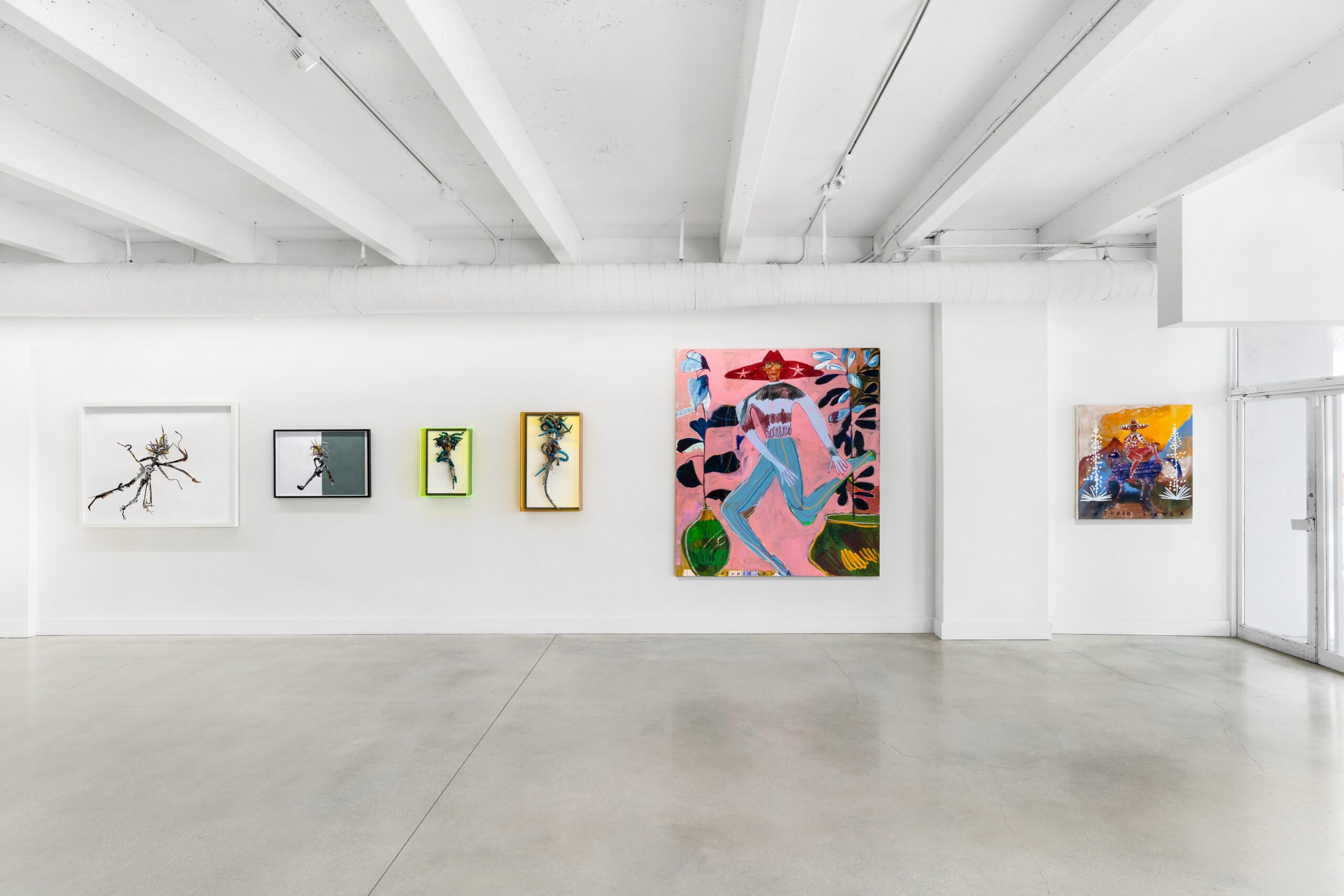


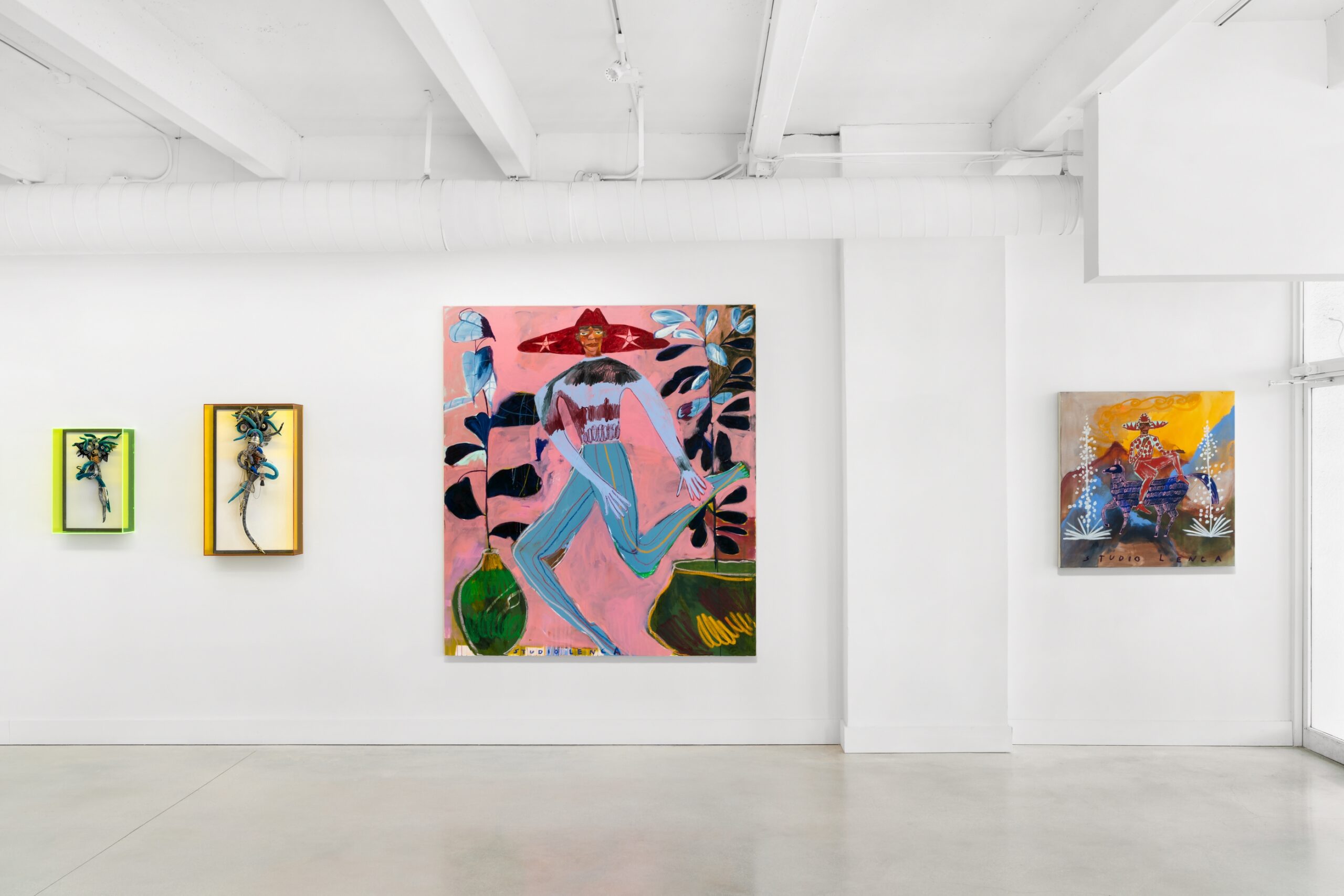


David Castillo presents The Majesty of the Elemental, a group exhibition of gallery artists concerning the monument—that landmark meant to both preserve and evoke memory.
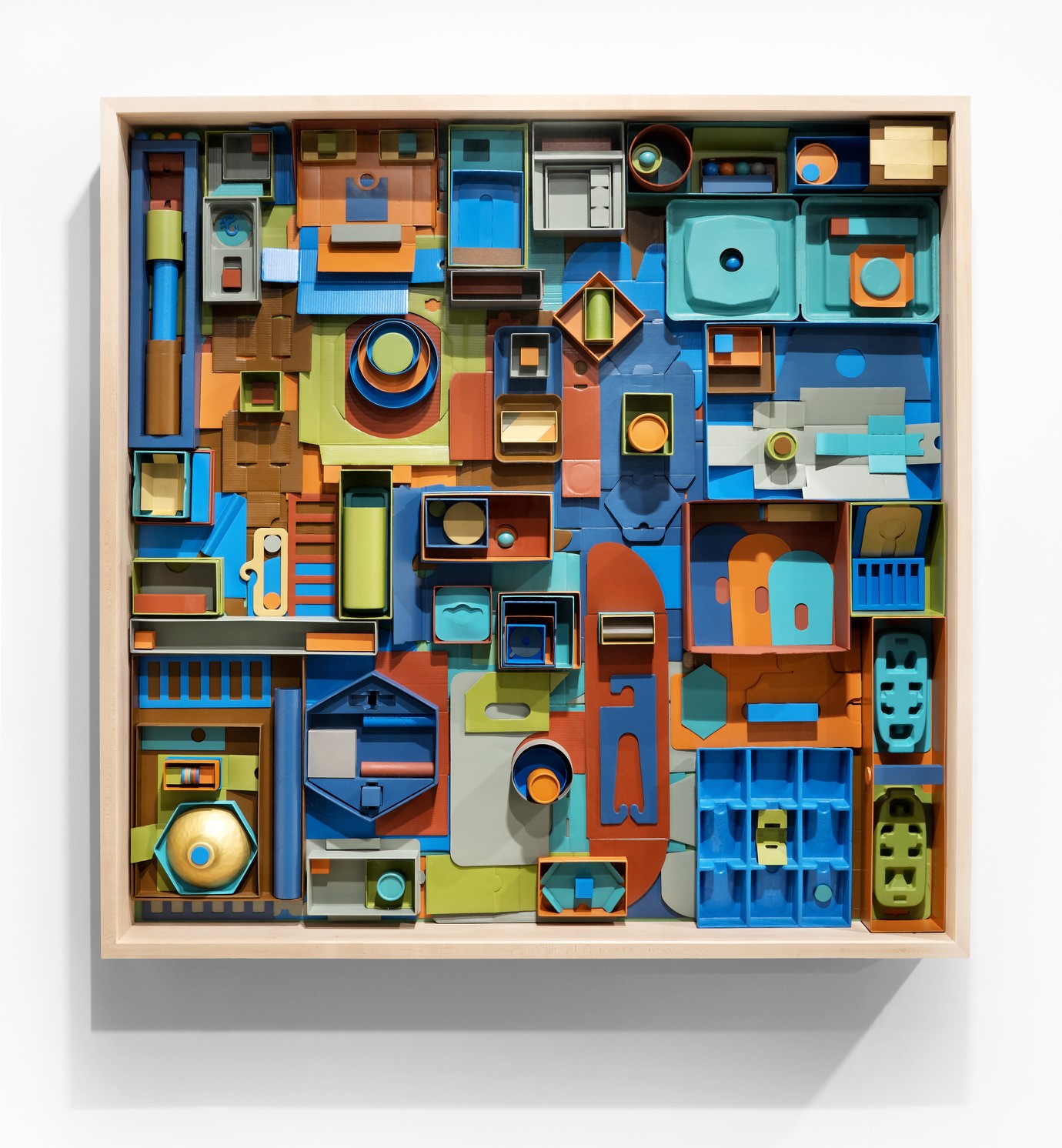
The works here are monumental not for their size but rather their narrative power. Studio Lenca’s Historiantes, Pepe Mar’s queer narratives, Belkis Ayón’s depictions of the Abakuá, Sanford Biggers’ future ethnographies, Quisqueya Henríquez’s conceptual reflections on Latin American modernist art: each artist tends to and draws from the histories inherent in their work. The monument here is legacy, and the way legacy might be contained in process and a resulting vision.
The distinction, while commonly used by anthropologists, is not so clear-cut, argues Sergio Alarcón Robledo, a postdoctoral associate and lecturer in the department of Near Eastern Languages and Civilizations in Yale’s Faculty of Arts and Sciences, in a recent paper published in Antiquity. “There is no consensus on what ‘monumental’ as a characteristic implies,” Robledo writes. “[It] does not describe an objective characteristic inherent to the building, such as a material or a color, but is instead a social construct.”
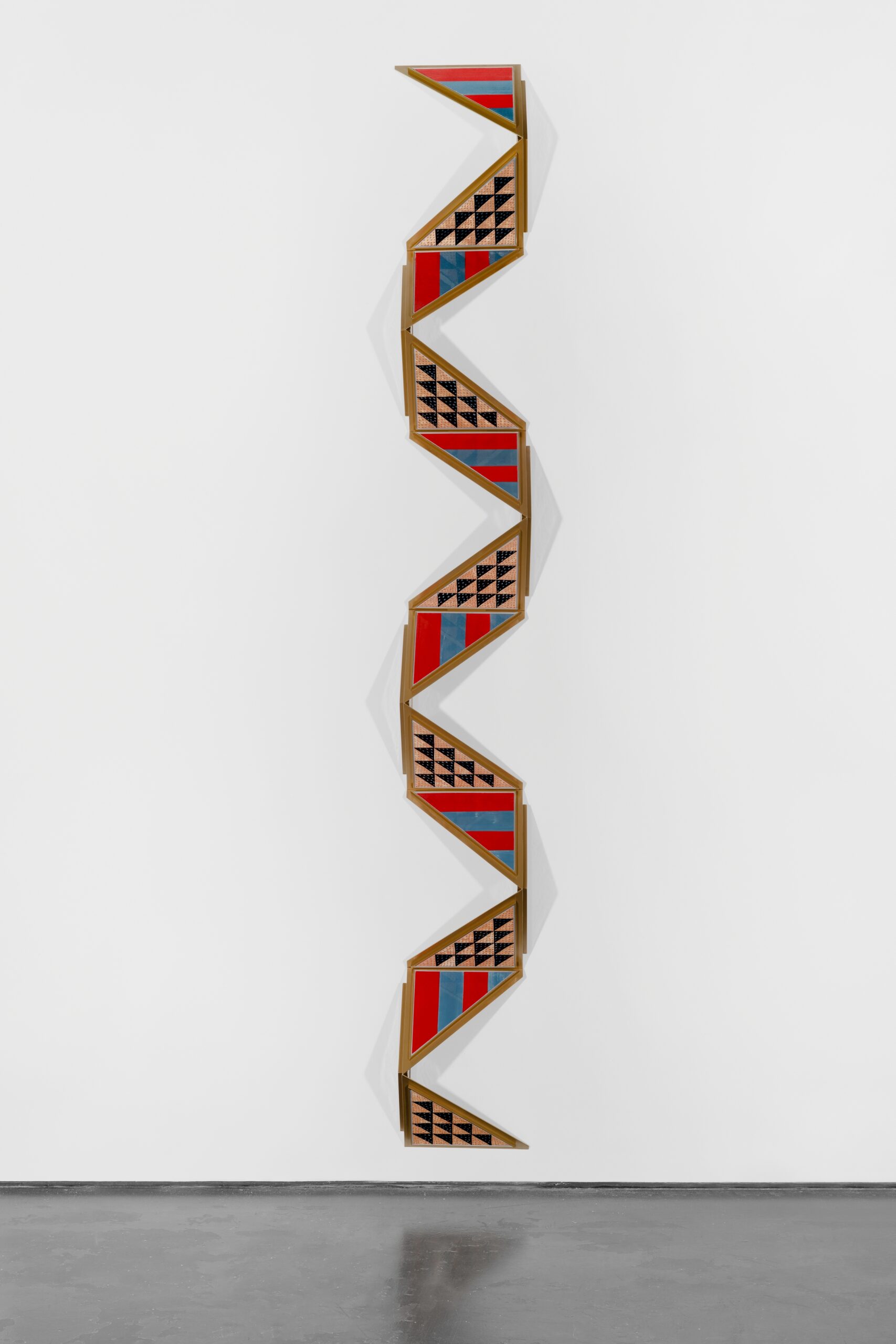
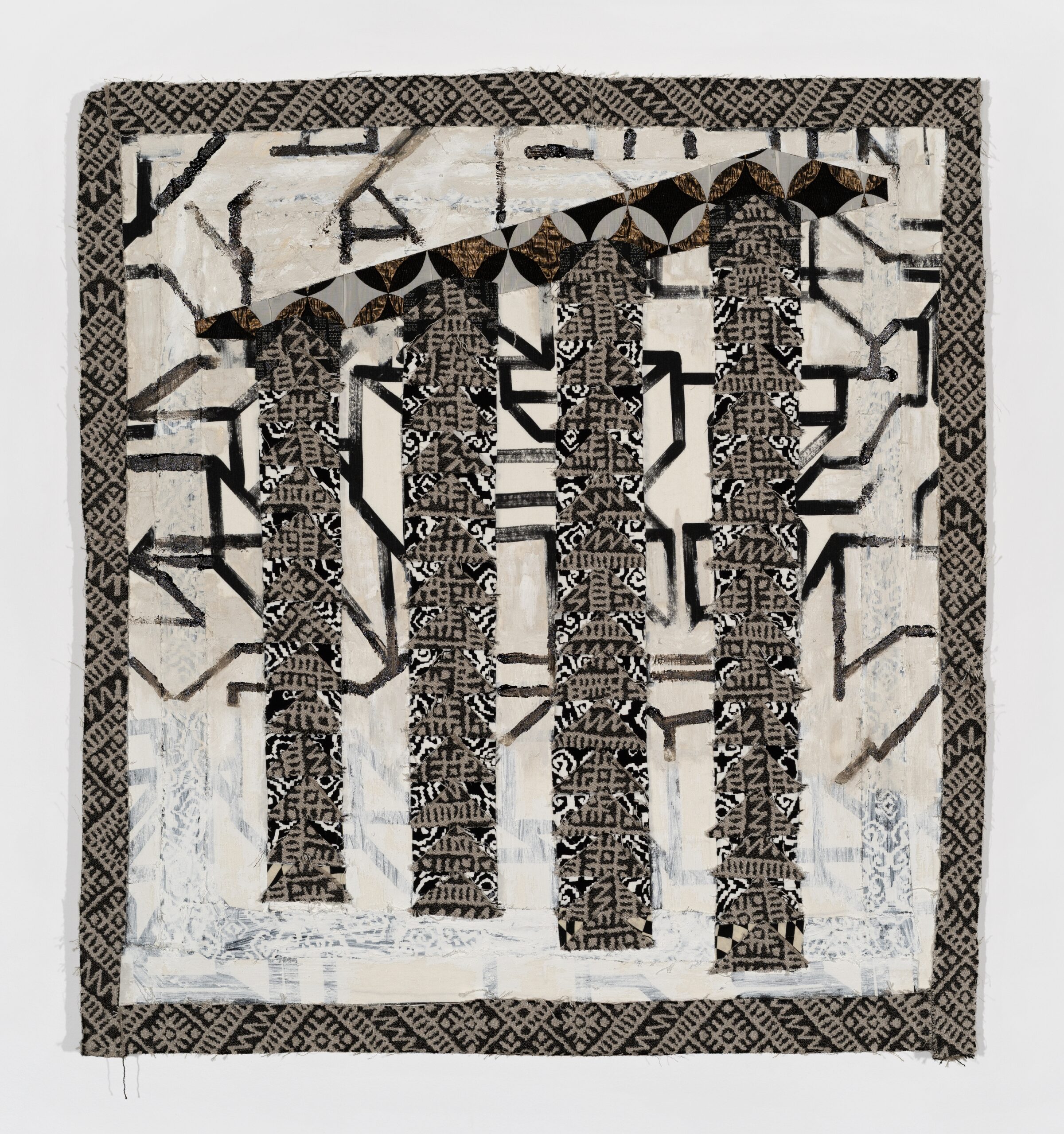
Biggers’s work has consistently synthesized the past, present, and future, challenging the linearity of history—he is a syncretic artist, drawing on Americana, Buddhism, music, and talismanic magic. He’s used the term “future ethnography” to describe what his artwork constitutes—its atemporality, its undecipherable origins. His quilt-based pieces reference the long history of textiles in this country, particularly in African American communities—for storytelling, cultural preservation, utility—while his ceramic sculptures, including Double Braid (2025), on view here, recall the place where he deepened the practice (Guadalajara, Jalisco, Mexico) and the tradition itself, which dates back to antiquity. Double Braid, shaped like a rippling helix, belongs to the lineage of ceramics, though it’s uniquely the artist’s.
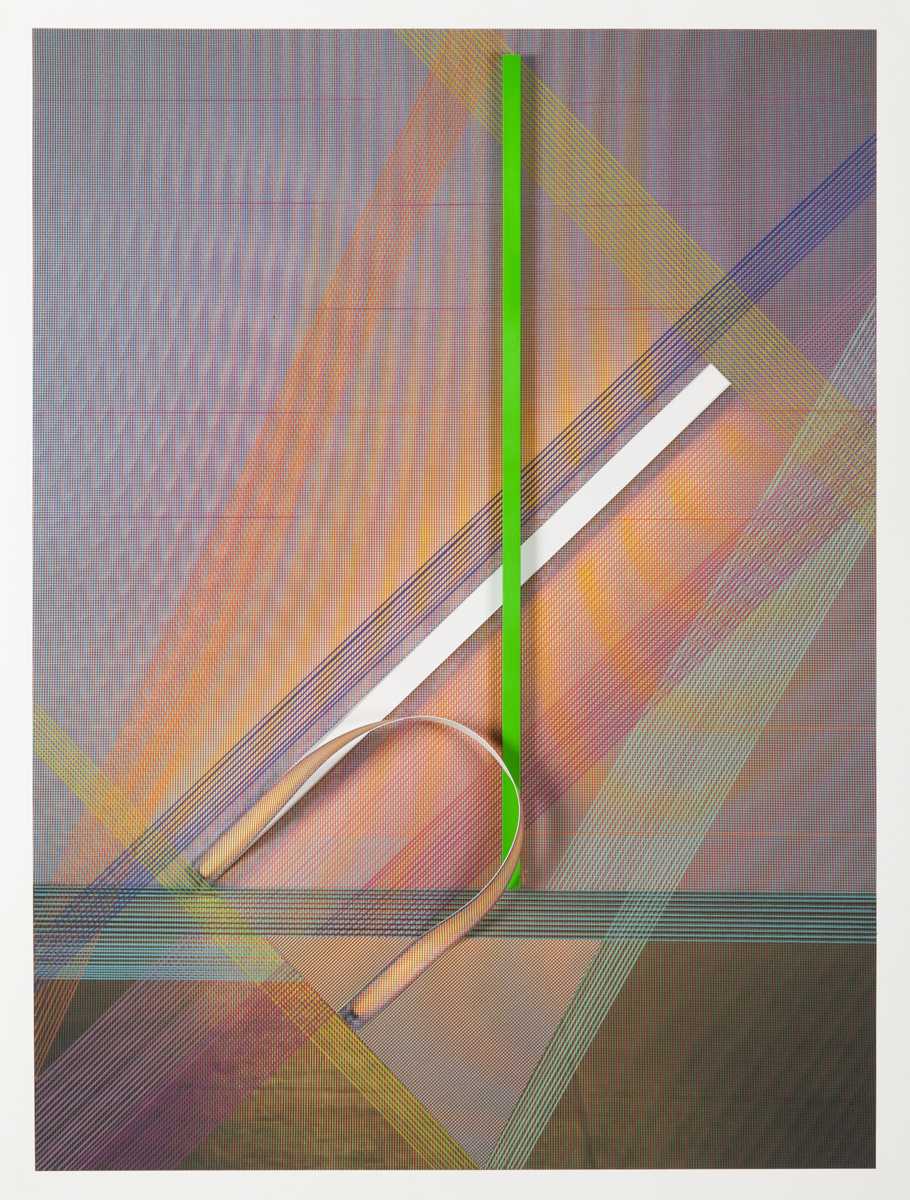
The late Henríquez restored Caribbean narratives to the art canon, playfully and precisely. Like Biggers, her work amends that history, toys with it, and, writes Amy Rosenblum-Martín, “questions tired power narratives”—decimating one monument, humorously building it anew. Consider her iconic Helado de agua de mar Caribe (Caribbean Sea Water Ice Cream), 2002, which asked viewers to materially ingest the Caribbean. Her work American Decadence (2011), on view in this exhibition, is a pointed critique: it combines Gordon Matta-Clark’s Splitting (1974), for which he sawed in half a New Jersey-based home that was set to be demolished, with a photograph of a house in Santo Domingo, where she once lived—a commentary on empire’s willingness to destroy rather than rebuild.
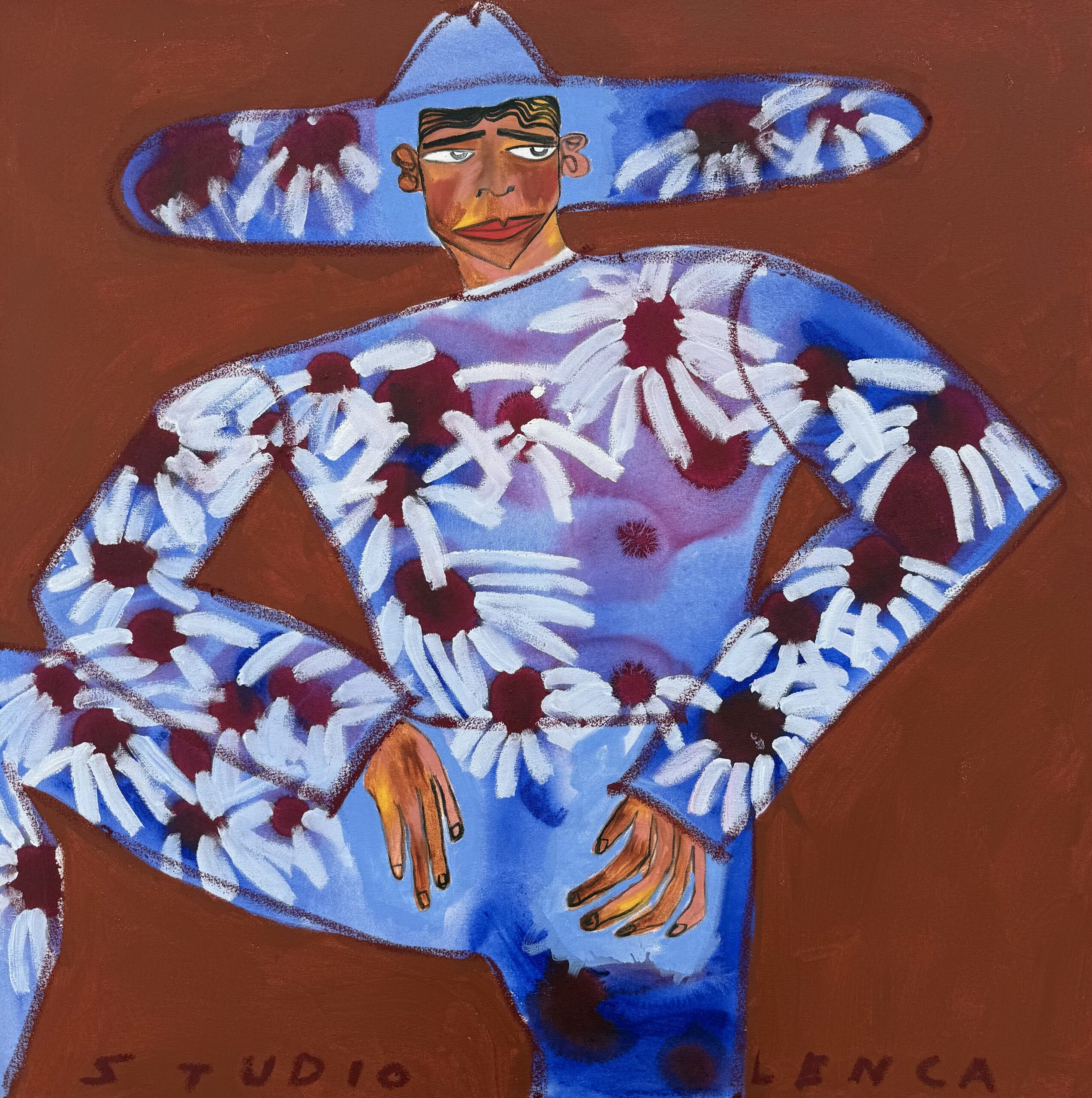
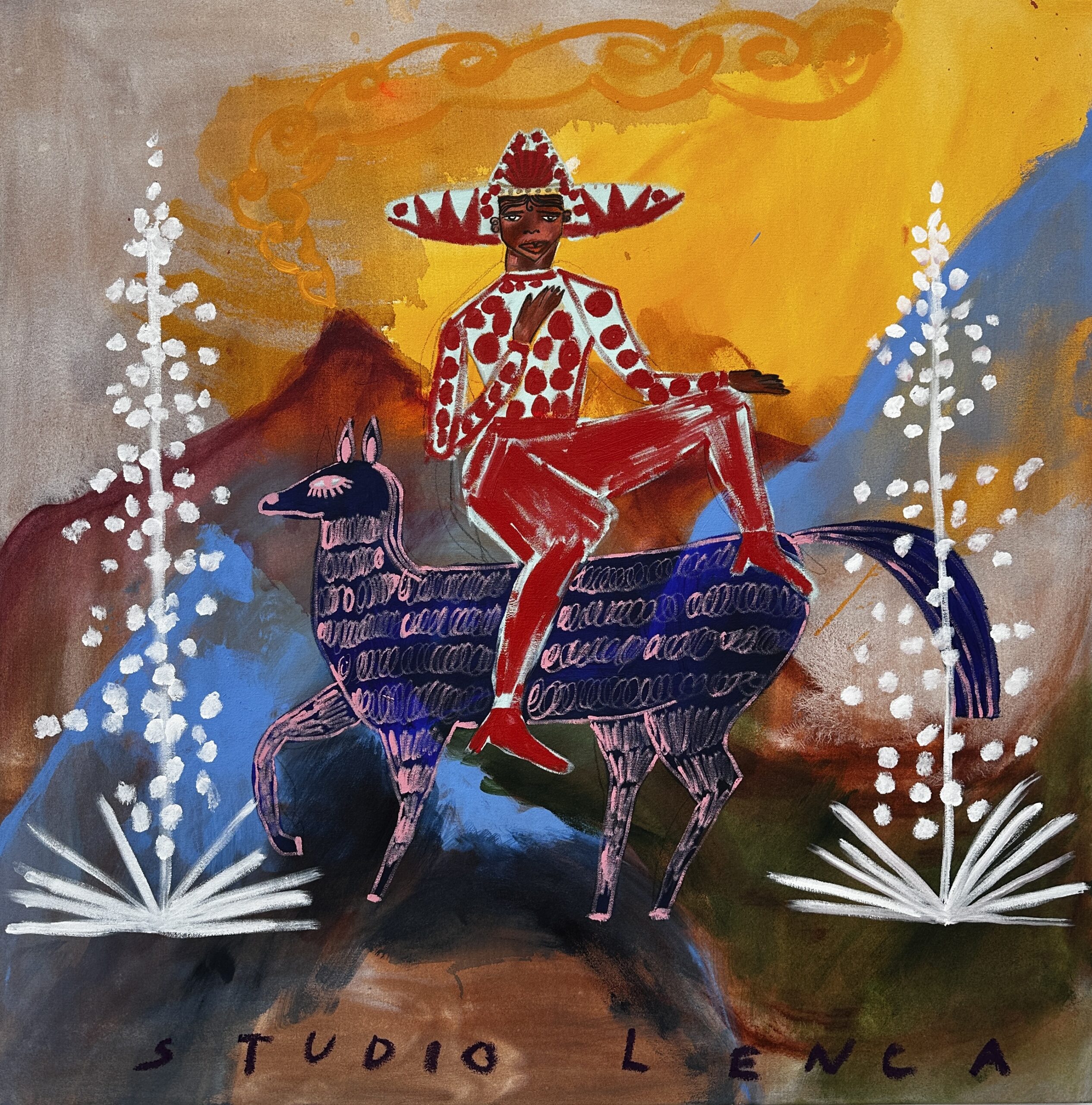
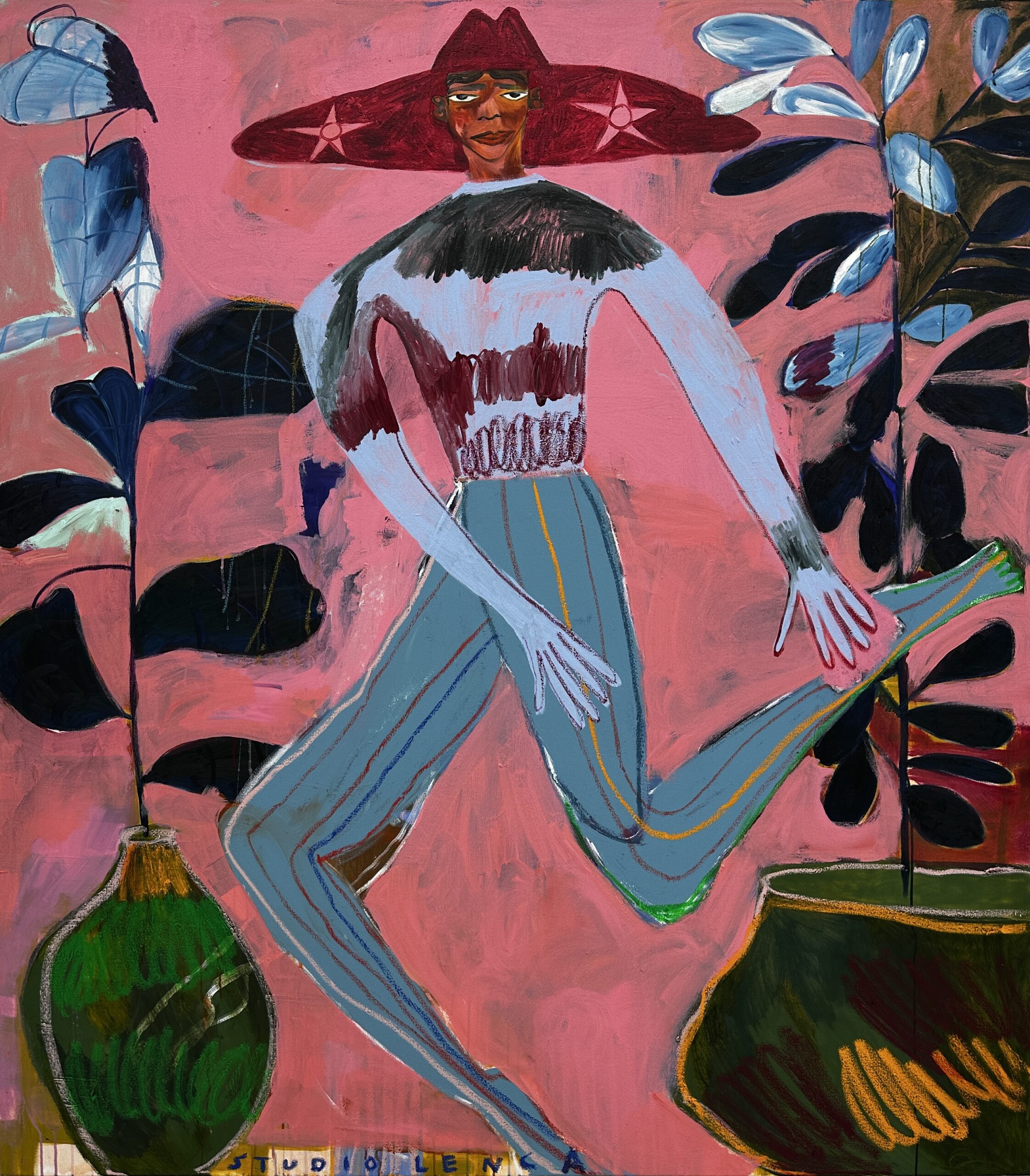
Studio Lenca’s Historiantes comes from a monumental tradition in its own right: the ceremonial masked dances of rural El Salvador, the artist’s homeland. Displaced during the Salvadoran Civil War and a dancer himself, Studio Lenca, born Jose Campos, was drawn to the Historiantes’ movement, their ability to embody and reenact history, and the insight they offer into his place of origin. He poses as and paints the Historiantes, the word itself a portmanteau of “history” and “student”; some works are housed in ornate, European frames, painted over, the portraits spilling into them. It’s an attempt, he explained in an interview with Talking With Creatives, “to think about how messy history actually is.”
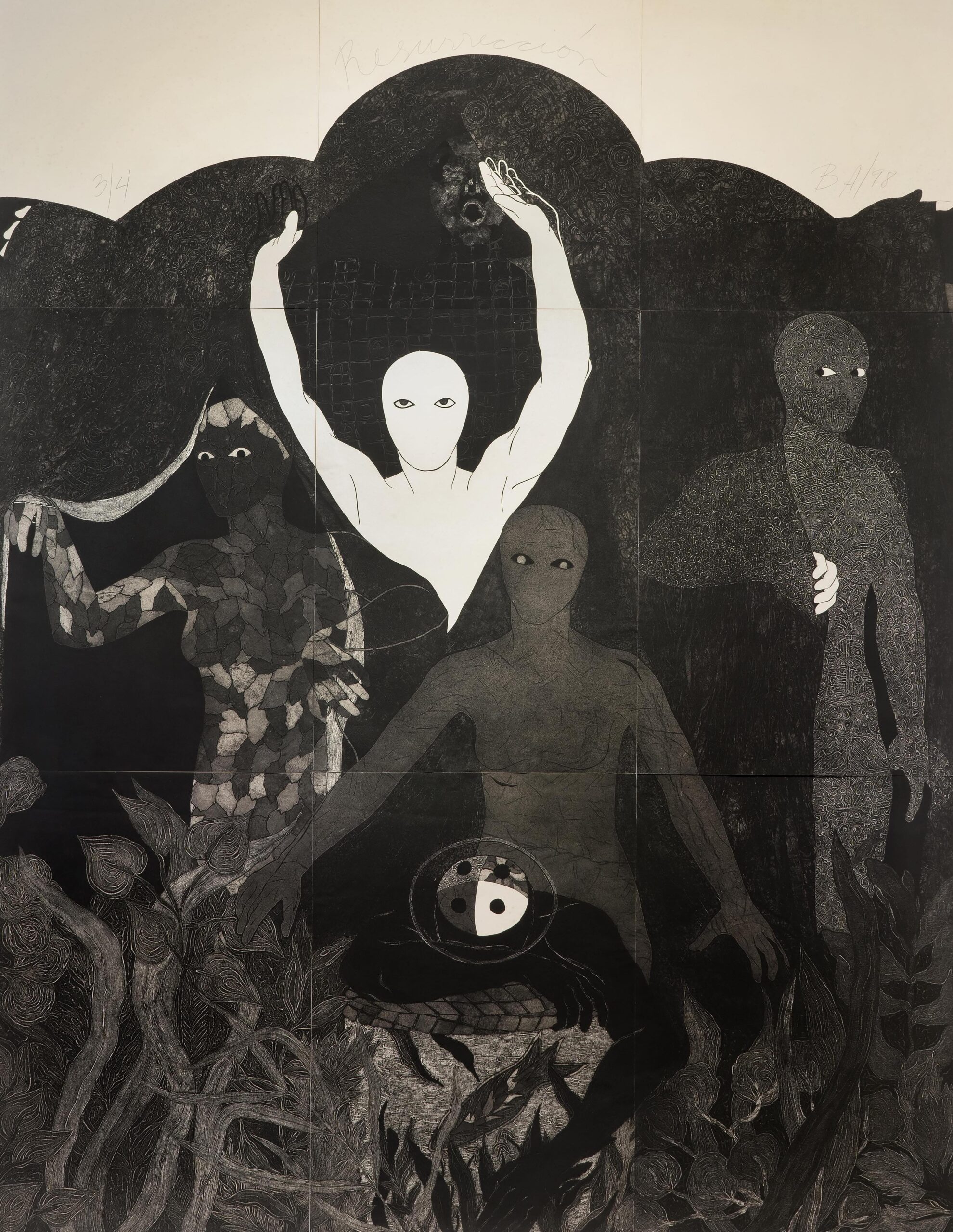
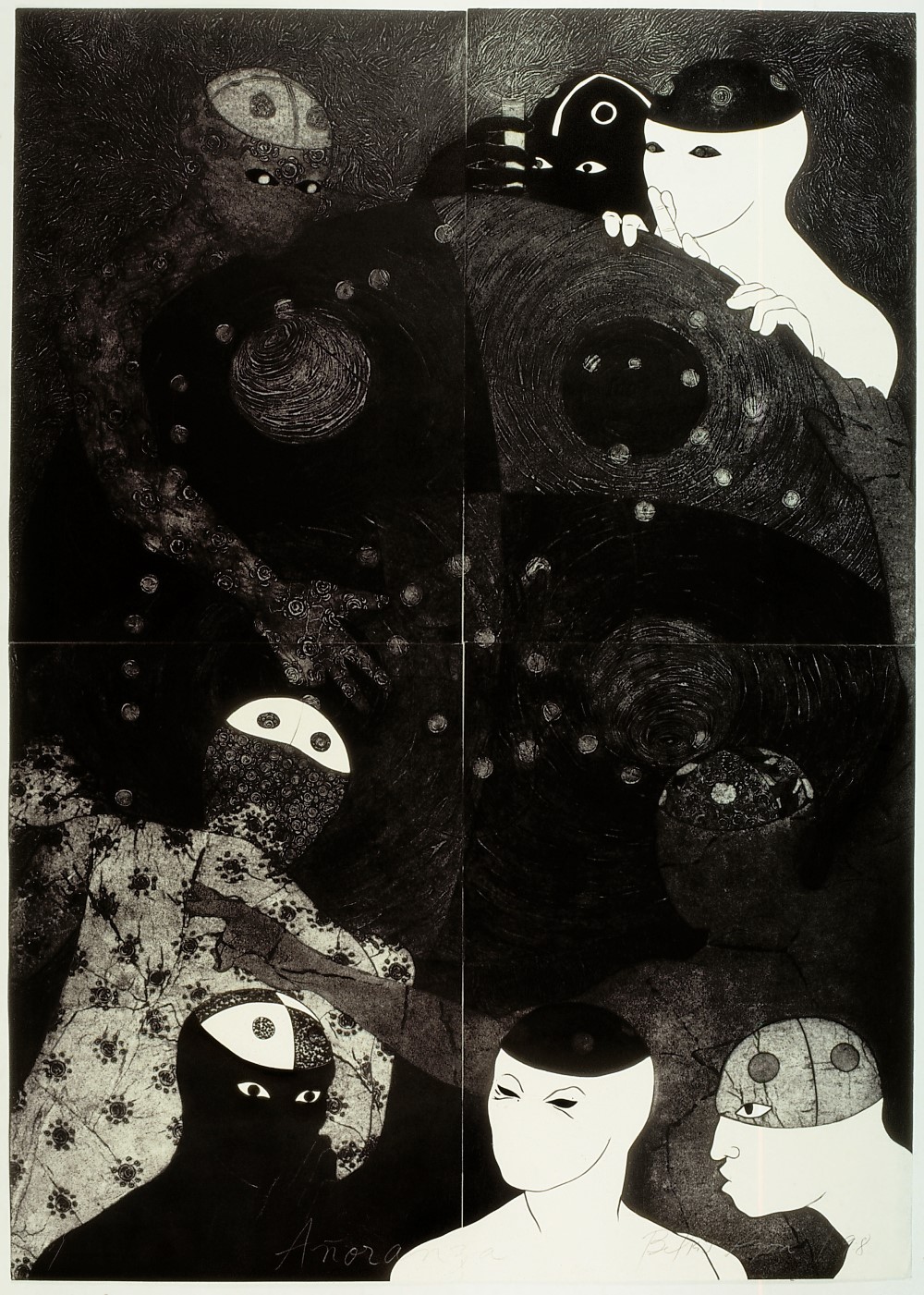
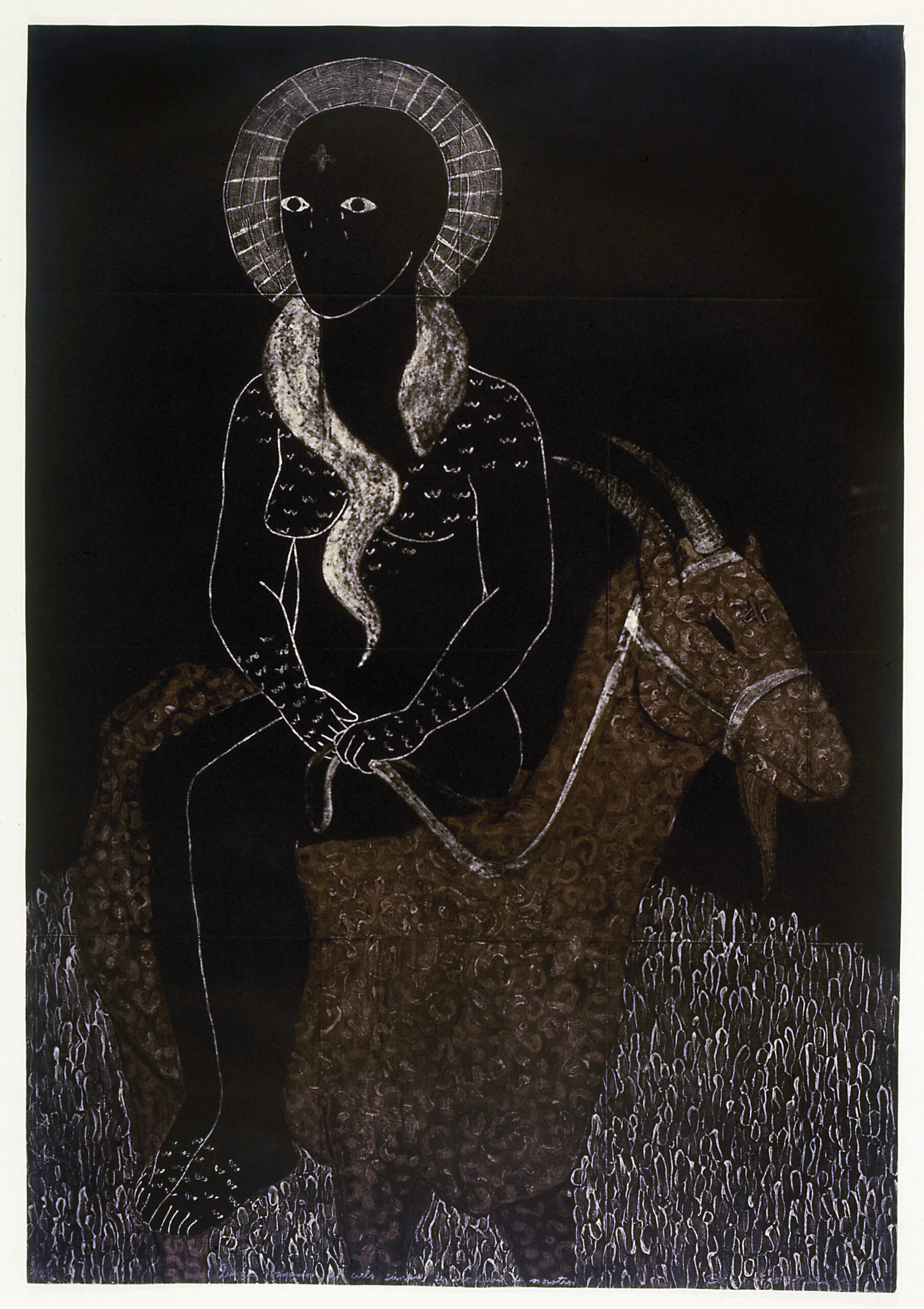
Belkis Ayón’s iconic collagraphs create a unique parallel to the Abakuá, a religious, all-male Afro-Cuban society. The works are mythic and inquisitive—she delved into the Abakuá’s secrecy and revisited their legend of Sikán, a princess who unwittingly trapped a sacred fish and was later sacrificed. Ayón’s black-and-white figures are mouthless, telling in their silence stories of interdimensionality, spirituality, and the materials themselves—due to material scarcity in ’90s Cuba, Ayón used vegetable peels and locally sourced ink, which lent her collagraphs their signature otherworldly black and white palette.
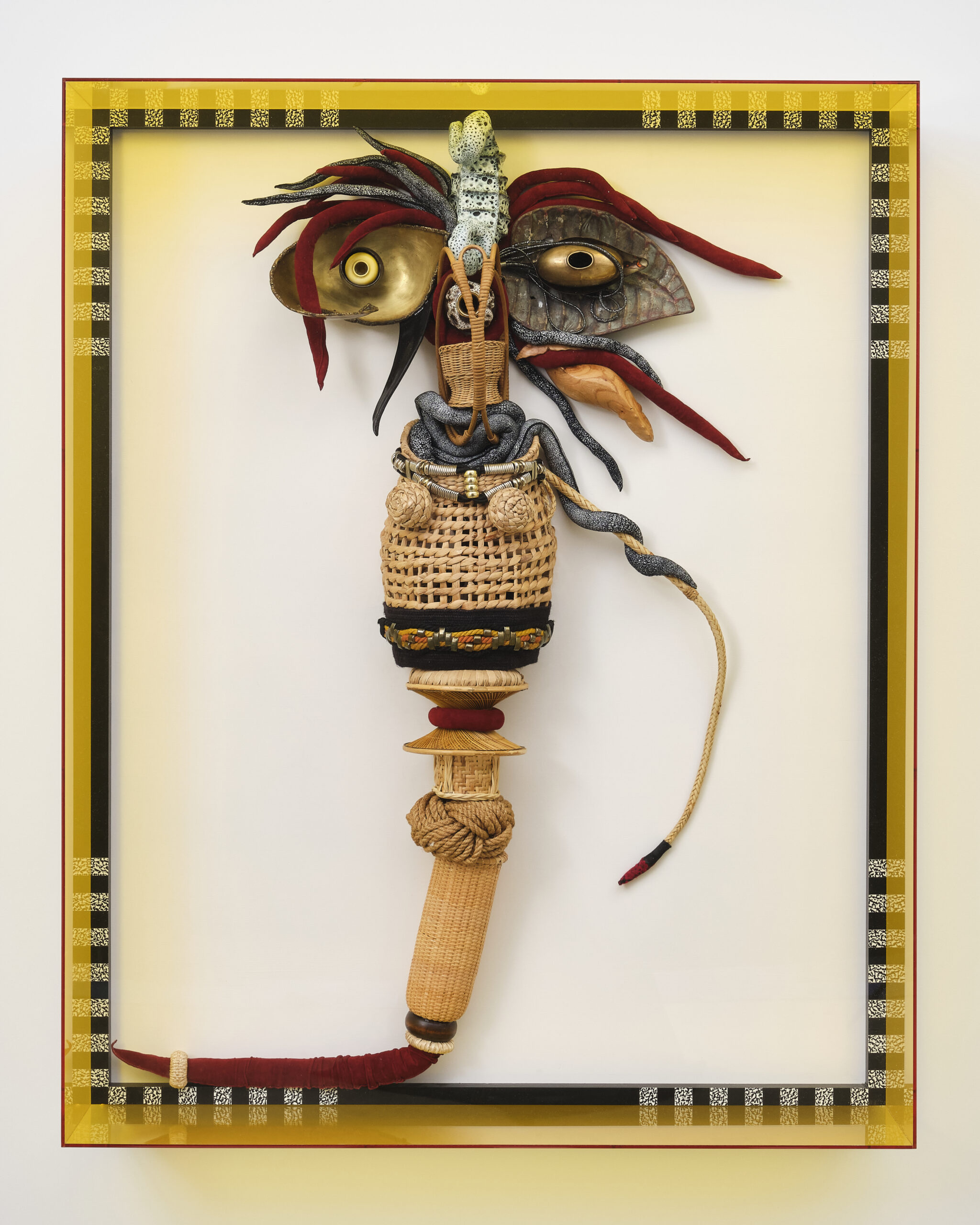
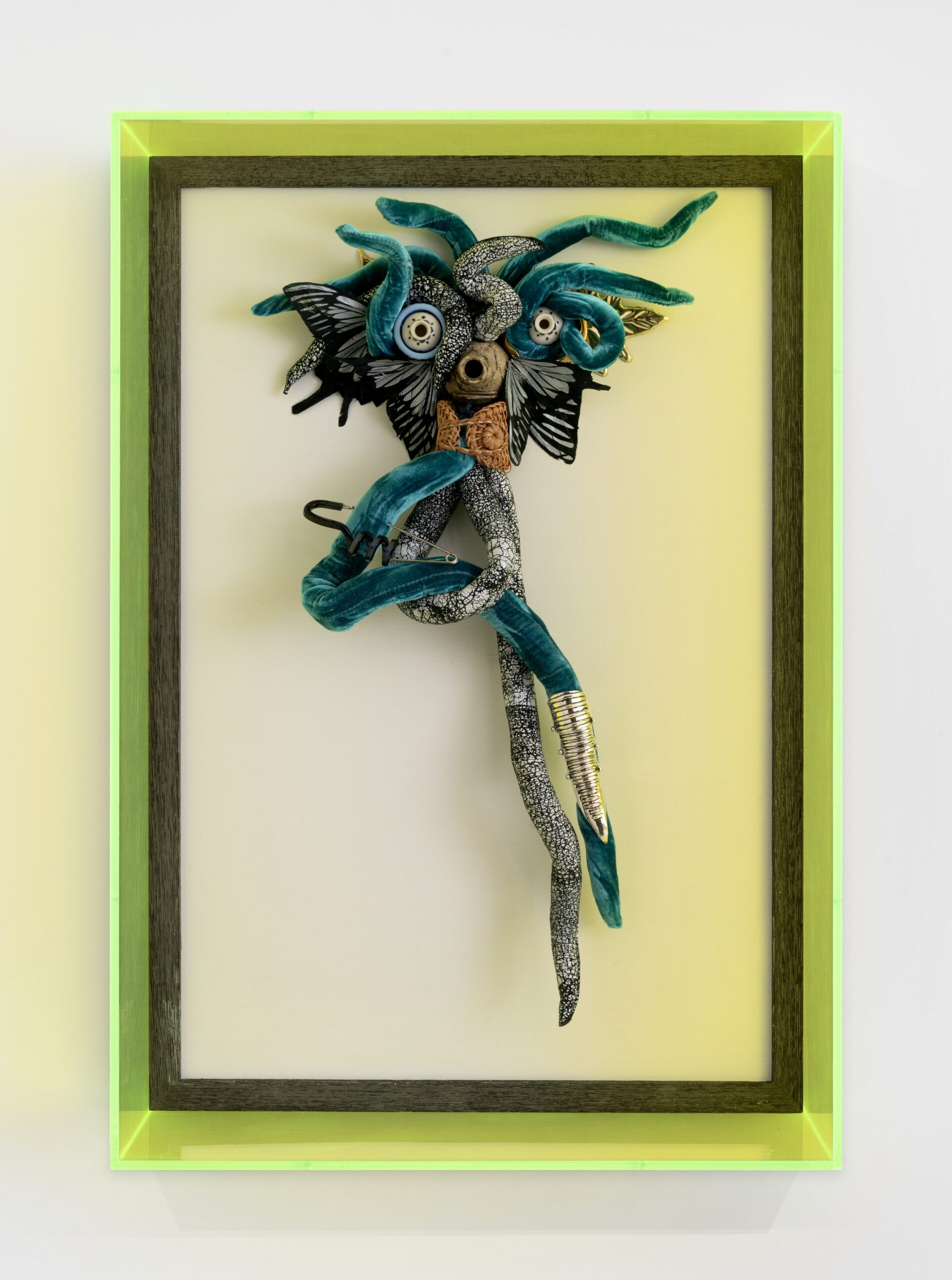
And speaking of myths, the assemblage artist Mar, responds to the ongoing erasure of queer histories, continually evoking them in his microcosmic installations—particularly through Paprika, his alter-ego and a genderless creature of science fiction who represents all those who exist outside the mainstream. Mar is, in effect, a mythologist: Paprika might come from the past or the future or both, but they are omnipresent, often displayed alongside Mar’s homages to real-life queer icons, like the drag artist Varla. Through Paprika, Mar iterates and expands the canon of queer art. It is fitting that in Silver Claw (2026), Paprika is glittering, winged and tubular with a blue-velvet tail, a small jug—made of clay—comprising their signature circular mouth. They are terraneous and cosmic, reptilian and avian, imaginary and manifest. Queerness, like history itself, is expansive, interpretive. Mar, like the other artists on view, writes his own.