

Art Basel Miami Beach
December 4 - December 6, 2026

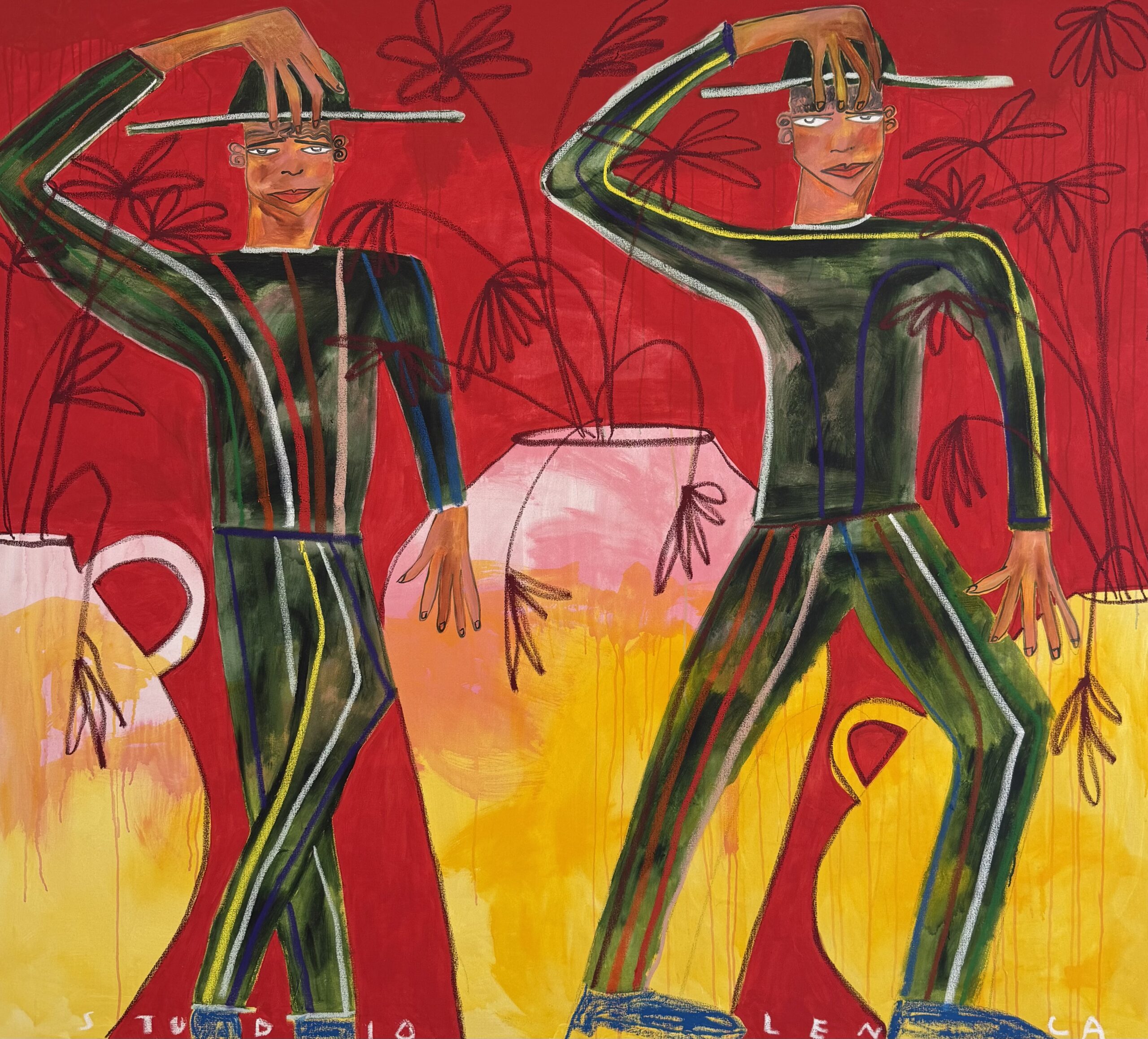


For Art Basel Miami Beach 2026, David Castillo (Galleries Booth D26) presents A History of Firsts, featuring works by Belkis Ayón, Quisqueya Henríquez, Sanford Biggers, Luis Manuel Otero Alcántara, Studio Lenca, Pepe Mar, Napoles Marty, Cisco Merel, Glexis Novoa, Grace Rosario Perkins, Xaviera Simmons, and Vaughn Spann. Spanning nearly four decades and bringing together painting, bronze, collagraphy, ceramics, and assemblage, the selection traces moments of artistic experimentation and breakthrough, when a visual language is taking shape or an established practice branches into new directions. The gallery’s history of following these turns is at the center of this presentation, cultivating the conditions in which an idea can take hold from the studio and into its first encounter with a public audience.
A History of Firsts brings different firsts into proximity: an artist’s encounter with an unfamiliar medium, the emergence of a new body of work, and an early proposition whose significance becomes clearer over time. A new process can open an unexpected approach to questions that have long coursed through a practice, carrying its concerns into different forms. The relationships among these works make it possible to follow how an artistic vocabulary develops through experiment and revision, as an initial choice gathers force or a familiar motif acquires new implications.
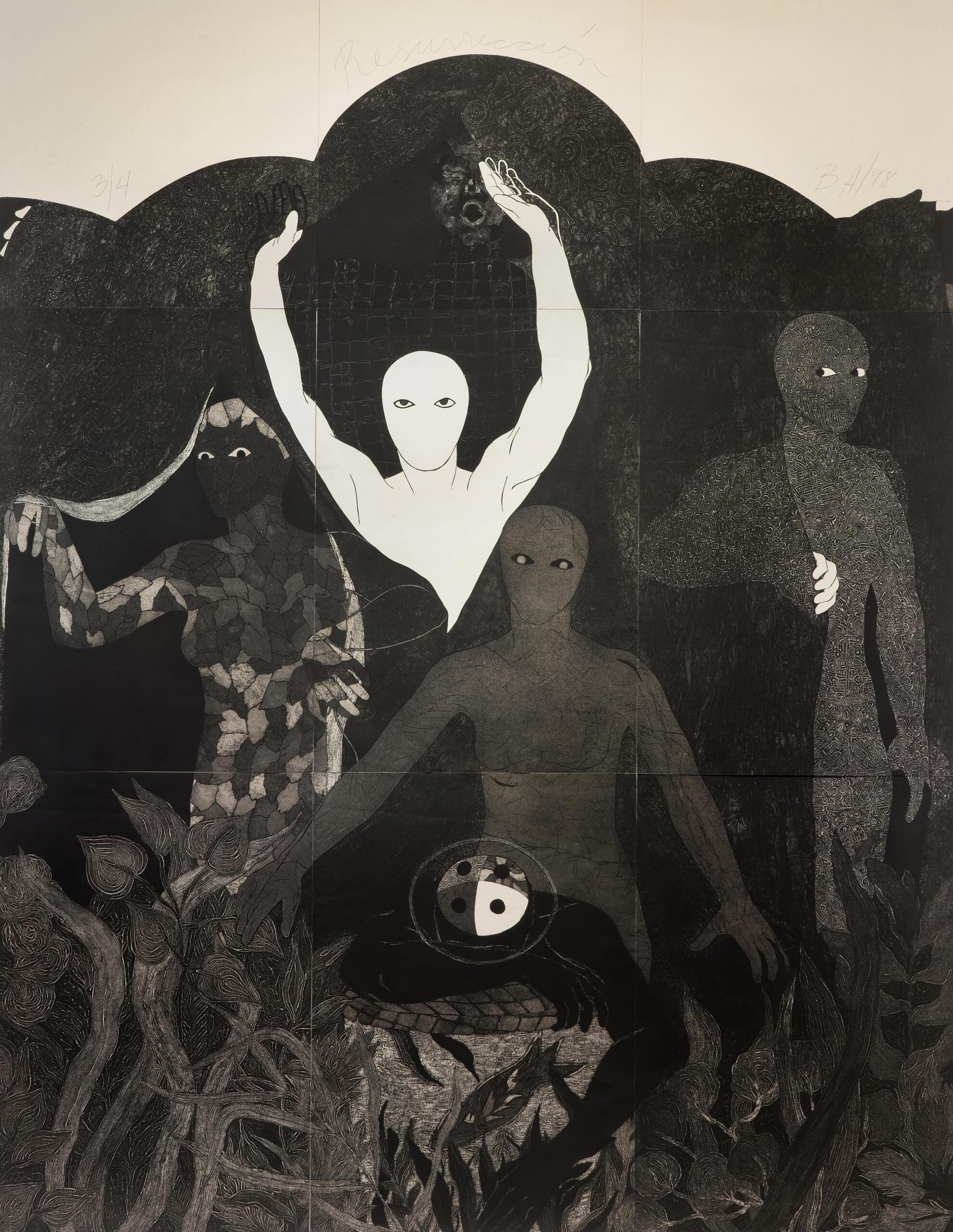
Earlier works reveal how choices of form and material begin to articulate concerns that will continue to shape an artist’s practice. In Belkis Ayón’s Iniciación II (1988) textured figures and symbols created from Abakuá narratives make restricted access to knowledge part of the image’s structure. A different hierarchy comes into view through Quisqueya Henríquez’s geometric work on paper (1997), which situates Latin American aesthetics within broader histories of abstraction. Geometry opens onto imagined architecture in Cisco Merel’s paintings, where interlocking planes construct monuments beyond the constraints of physical space. Each makes form a means of negotiating inherited structures, whether ritual, art historical, or architectural.
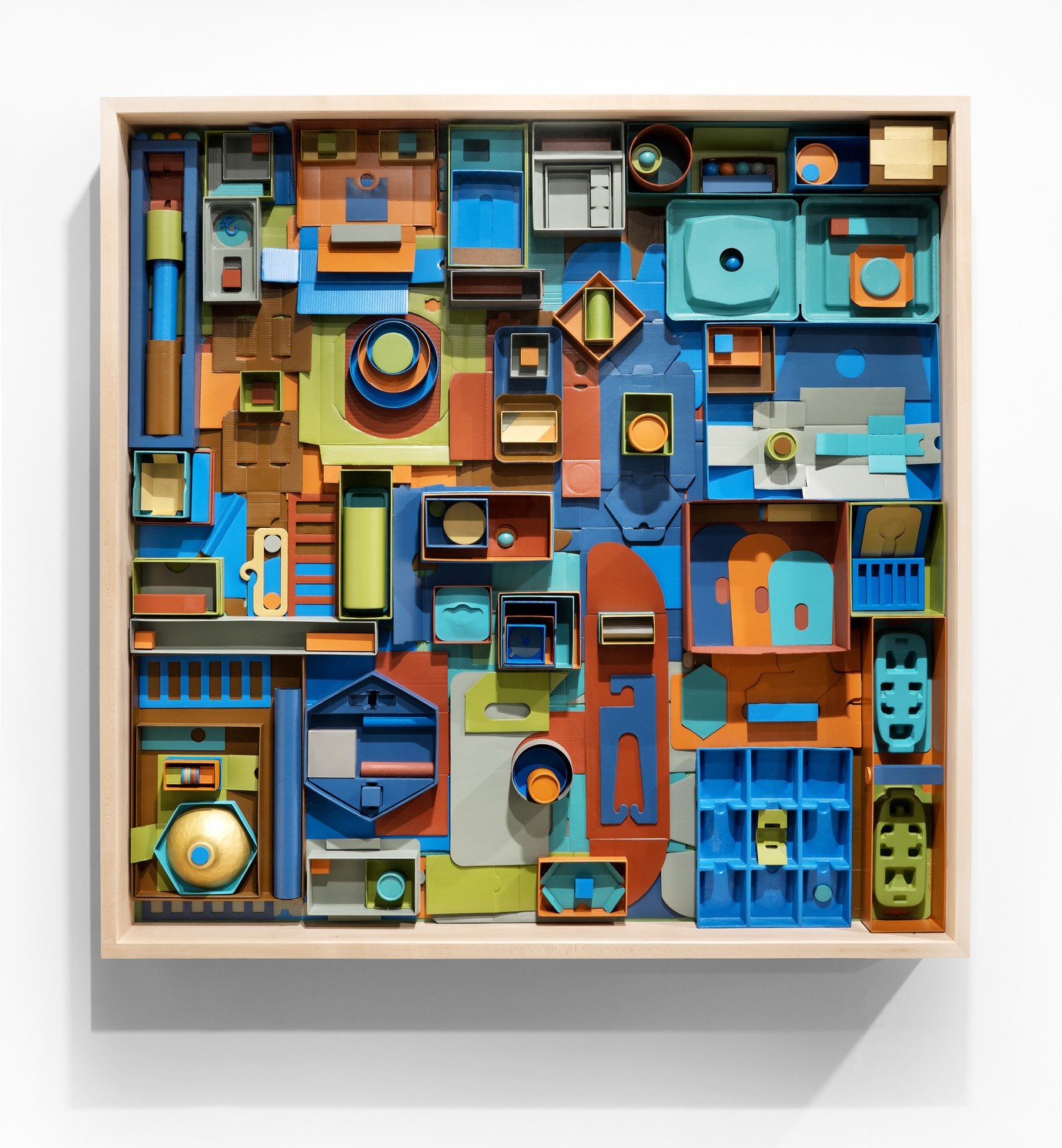
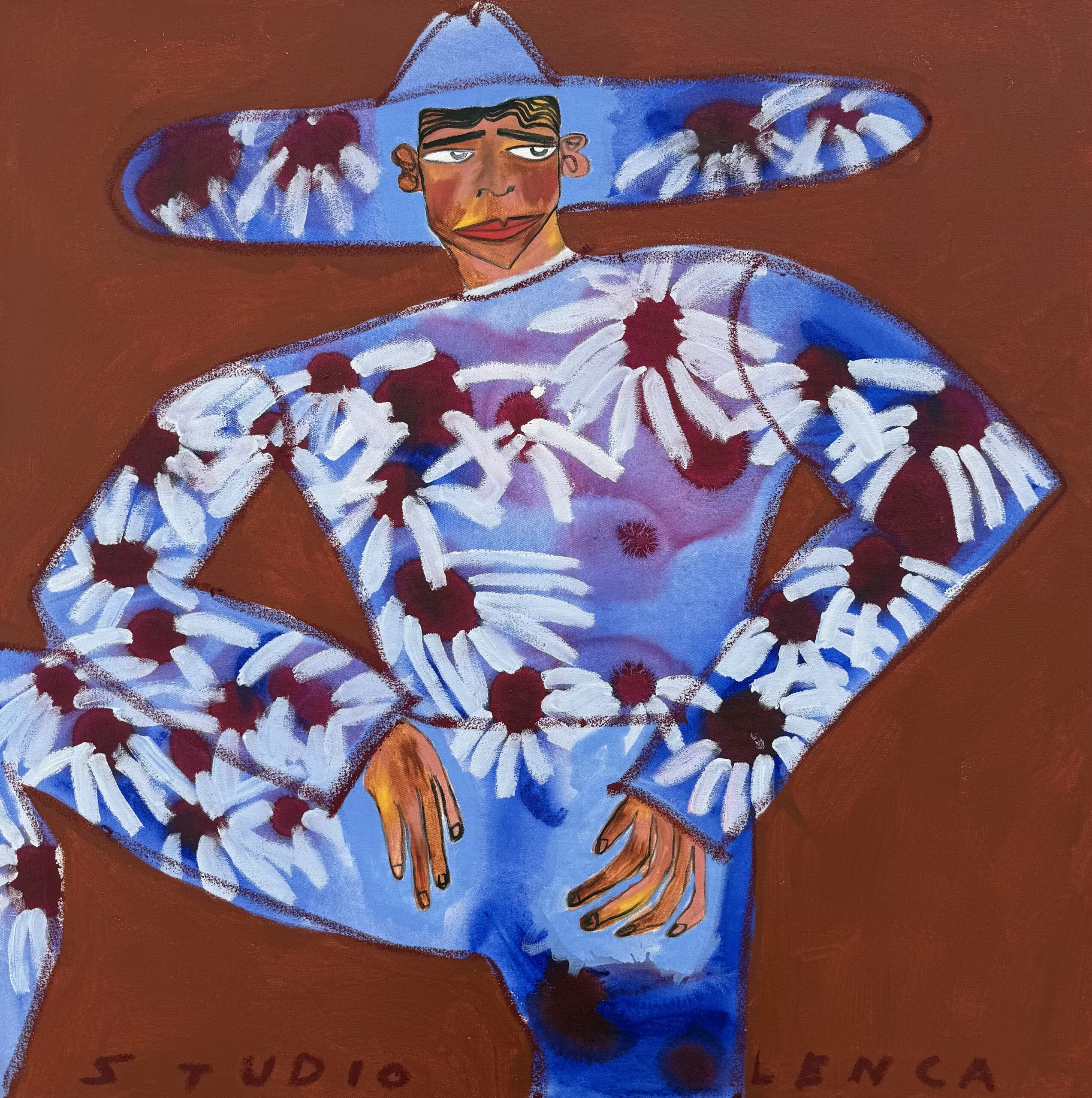
Four small bronzes bring distinct sculptural vocabularies into relation through a shared material and scale. For Napoles Marty, his first bronze extends a practice developed largely in wood, with the accompanying painting carrying his inquiry into two dimensions. Cast volume and embroidered ornament give the figure new material presence in Studio Lenca’s first bronze and first embroidered painting. In Pepe Mar’s new bronze, the disparate associations of his assemblage boxes acquire the continuity of a cast object. Shown alongside a drawing made in prison, Luis Manuel Otero Alcántara’s first bronze brings experimentation into proximity with the circumstances of confinement. The movement into bronze carries forward the particular histories from which each artist’s forms emerge.
An established concern can acquire new dimensions when a change in process alters the relationship between subject, material, and gesture. Using plants and flowers as brushes, Xaviera Simmons brings her longstanding engagement with landscape directly into the act of painting. With Sanford Biggers’s quilt construction, the artist continues a body of work where the source remains active within new processes, shaping both the work’s surface and its associations.
Across new paintings and drawings, recurring marks and visual references acquire different implications through their relationships to composition and material. In Vaughn Spann’s Caged Men (the first painting in a new body of work), the X associated with his Marked Man works multiplies across the canvas, extending an individual sign into a compositional structure. Accumulation takes a more heterogeneous form in Grace Rosario Perkins’s layered paintings, where text, symbols, and personal references generate associations through juxtaposition. A charged relationship between image and support emerges in Glexis Novoa’s drawing on marble, whose fragile line unsettles the stone’s associations with permanence and monumental authority. Meaning develops through these acts of repetition, layering, and material friction, making the organization of the image inseparable from its implications.
Seen together, these works allow a first to be experienced at different distances: as an experiment whose implications are still unfolding, as a decisive turn recognized in retrospect, or as a renewed encounter with something already familiar. The proximity of these moments invites viewers to move between recognition and anticipation, attending to what a work carries forward and what it makes newly possible. A History of Firsts gathers these beginnings in a shared present, where their significance continues to take shape through our own looking.
The artists in this year’s presentation are in current exhibitions at MASP, São Paulo; Nasher Museum, Durham; Kanal-Centre Pompidou, Brussels; Studio Museum in Harlem, New York; Reina Sofia, Madrid; Museum of Art & Design, Miami; Currier Museum, Manchester, NH; Everson Museum, Syracuse; Kunsthal N, Copenhagen; Moody Center for the Arts, Houston; and are in upcoming exhibitions at Bundeskunsthalle, Bonn; Kunstmuseum, Basel; Espoo Museum of Modern Art, Espoo, Finland; Centre for Fine Arts, Brussels; Pinacoteca, São Paulo; Bass Museum, Miami Beach; Contemporary Art Museum, Panama City; Museum of Contemporary Art, Monterrey; Museo del Barrio, New York; and were in recently closed exhibitions at Whitney Museum, New York; Tate Modern, London; SFMOMA, San Francisco; Crystal Bridges Museum, Bentonville; Kunsthalle, Lisbon; ICA, Los Angeles; MALBA, Buenos Aires; Bildmuseet, Umea; Stedelijk Museum, Amsterdam; MOCA Los Angeles; MoMA, New York; Centre Pompidou- Metz; Modern Art, Oxford; Kemper Museum of Contemporary Art, Kansas City; MoMA P.S.1, New York; Parrish Art Museum, Watermill; LACMA, Los Angeles; Guggenheim, New York, among many others.

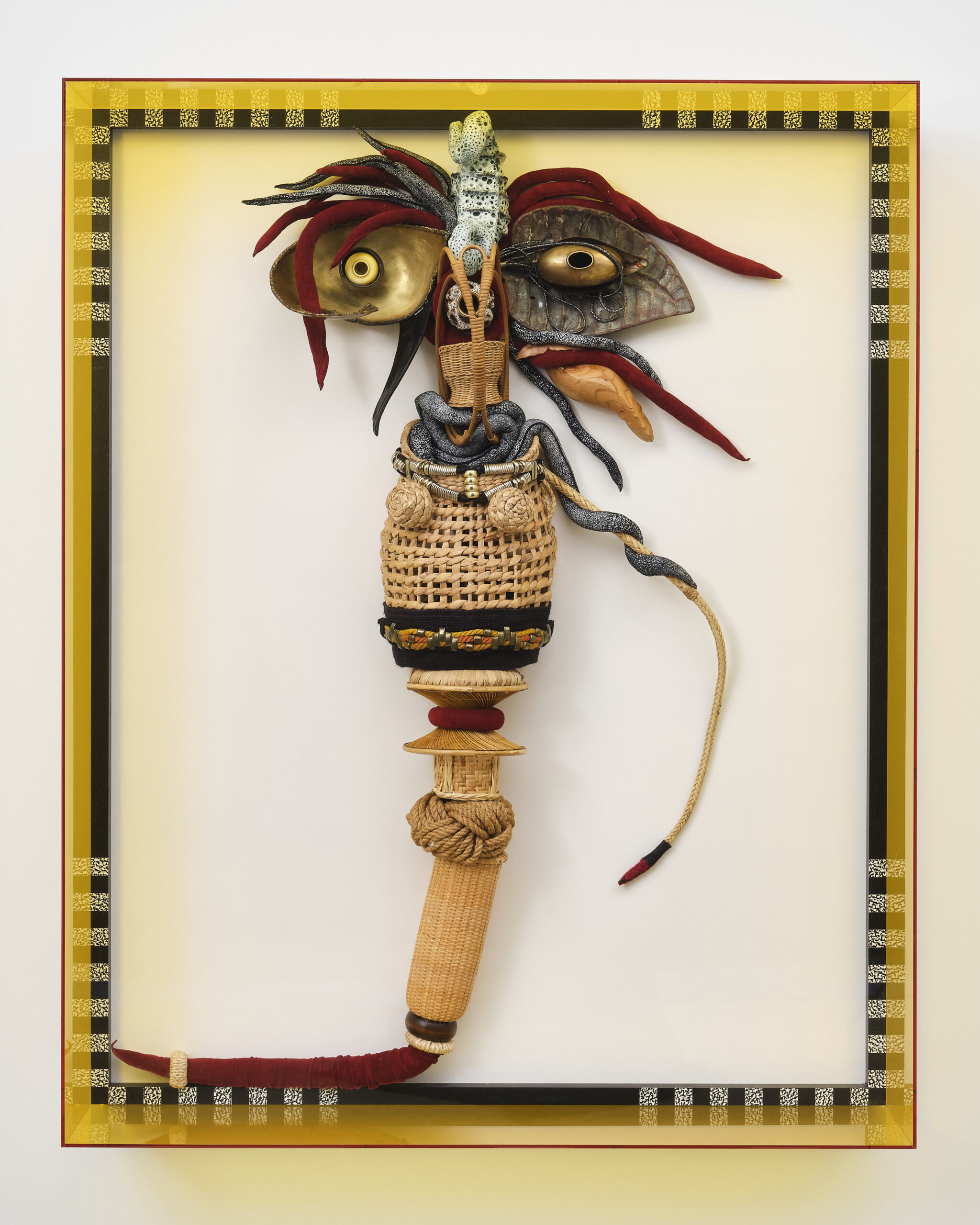


Napoles Marty
Cisco Merel
Luis Manuel Otero Alcántara
Grace Rosario Perkins